Nutrients for Cattle: A Complete Guide
The use of adequate, well-balanced nutrients for cattle can maximise profits or minimise losses in a feeding program. An animal’s diet must contain the essential nutrients in appropriate amounts and ratios. This fact sheet outlines the nutrients for cattle that are basic to good cattle nutrition. It also explains how well-balanced feeds succeed in supplying these nutrients. However, to better understand how feeds work, you must understand the digestion process in animals.
Digestive Systems
In the monogastric or single-stomached system (e.g., the pig and man), the digestive tract is essentially a muscular tube extending from the mouth to the anus. Its function is to ingest, grind, digest and absorb food, and to eliminate waste products.
In the monogastric, food enters the mouth and mixes with saliva, which starts to break down the starch. The food then moves to the stomach where gastric juices break it down into its component nutrients. Further digestion occurs in the small intestine before nutrients enter the blood stream and travel to every cell in the body. The watery mass remaining then moves through the muscular digestive tract into the large intestine. The large intestine has the important function of absorbing water. The large intestine terminates in the anus, through which waste products leave as feces or manure.
Monogastrics eat both animal and vegetable foods. A monogastric animal usually chews its food before swallowing. In contrast, the ruminant swallows its food after very little chewing. The food later returns to the mouth for more thorough chewing. Hence the word ruminant describes an animal that chews its cud.
The diet of a ruminant normally consists mainly of fibrous plant material. This material requires prolonged chewing, fermentation and soaking before its nutrients become available for digestion and absorption. The forestomachs (three compartments called the rumen, the reticulum and the omasum) handle this process. The stomach proper, corresponding to the simple monogastric stomach, is called the abomasum.
The rumen functions as a huge 275-litre (60 gal) fermentation vat. Here, hay, straw and other foodstuffs undergo processing for digestion in the true stomach. The microorganisms in the rumen derive their nutrients from the feed the cow consumes. This allows the cow to utilize high-fibre materials such as hay and straw, which cannot be digested by a single-stomached animal. Bacteria and protozoa break down the fibrous plant material into volatile fatty acids (VFA). The body absorbs these VFA through the rumen walls. The bacteria also make B vitamins and can convert urea or ammonia from non-plant sources into protein.
Furthermore, the microorganisms pass along the digestive tract with other food materials. The cow then digests them to gain additional energy, high-quality protein and other nutrients.
The reticulum acts together with the rumen and traps foreign materials the animal may have swallowed, like wire or nails. Food passes from the rumen through the reticulum to the omasum. In the omasum, projections radiating from the walls grind the food. It then proceeds to the abomasum, where digestion proceeds much as it does in the monogastric.
Feeds for beef cattle must supply energy, protein, certain vitamins and minerals. Although different species have different nutritional requirements, one principle applies to the nutritional requirements of all animals. That principle states: if you feed ample amounts of all nutrients but one, the level of that particular nutrient will limit performance.
The main components of food are water and dry matter. The dry matter consists of organic material and inorganic material.
Water plays an essential role in transporting metabolic products and wastes throughout the body. It also participates in most chemical reactions in the body. The amount of water required varies with the amount of feed consumed, body size, species and the surrounding temperature. However, if water intake declines, feed intake usually declines as well.
Energy Requirement for Cattle
Animals require energy for maintenance, growth, work and for the production of milk and wool. Feeds are evaluated in terms of the amount of energy an animal can obtain from them. Digestible energy (DE) is the gross (total) amount of energy in the hay and grain fed to an animal minus the amount lost in the feces. Energy is usually reported in megacalories (Mcal) per kilogram. (One kilocalorie equals 1,000 calories. One megacalorie equals 1,000,000 calories).
The amount of DE an animal needs per day varies according to body size, weight gain, milk production and work. The amount of energy required to maintain an animal for one day without loss of body weight is called the energy required for maintenance. Most symptoms of slight energy deficiency are not very noticeable. These include slightly reduced gains, less than maximum milk production and small increases in calving interval. The more severe the energy deficiency, the more noticeable the symptoms become. The animal stores excess energy as fat.
The most common energy source comes from the carbohydrates contained in feeds. These are the sugars, starches, cellulose and hemicellulose that have been stored in plant tissues. Chemical reactions within the animal release the energy in the feed (originally trapped from the sun by the plant) and convert it to other forms of energy the animal can use.
Lipids provide another energy source found in plants. They are fats and compounds closely related to them. Lipids contain about two and a half times as much energy as carbohydrates.
Table 1 gives the digestible energy values of some common feeds.
Table 1. Average Energy and Protein Values of Some Alberta Feeds (Dry Basis)
| Feedstuff | Digestible Energy (Mcal/kg) | Digestible Energy (Mcal/lb) | Crude Protein (%) |
|---|---|---|---|
| Hay | |||
| Alfalfa | 2.60 | 1.18 | 17.7 |
| Alfalfa-grass | 2.46 | 1.12 | 14.5 |
| Native | 2.13 | 0.97 | 9.0 |
| Brome | 2.24 | 1.02 | 9.9 |
| Greenfeed | |||
| Barley | 2.64 | 1.20 | 10.0 |
| Oats | 2.53 | 1.15 | 9.4 |
| Silage | |||
| Barley | 2.64 | 1.20 | 10.9 |
| Oats | 2.53 | 1.15 | 10.0 |
| Straw | |||
| Barley | 1.98 | 0.90 | 4.7 |
| Oats | 2.16 | 0.98 | 4.5 |
| Wheat | 1.80 | 0.82 | 3.9 |
| Grains | |||
| Barley | 3.65 | 1.66 | 12.3 |
| Oats | 3.34 | 1.52 | 11.6 |
| Wheat | 3.87 | 1.76 | 15.8 |
Proteins as Nutrients for Cattle
Proteins consist of amino acids, which contain carbohydrates, nitrogen and sometimes sulphur. Ten amino acids are essential for monogastrics. Ruminants, however, only need a source of nitrogen or a poor-quality protein. The microbes in the rumen can then construct the essential amino acids from this source.
Protein is absolutely essential for growth, reproduction and maintenance in both monogastrics and ruminants. Mature animals require less protein on a percentage-of-feed basis than young animals. The animal utilizes excess protein as an energy source.
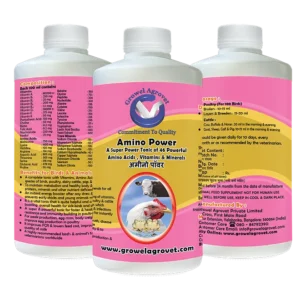
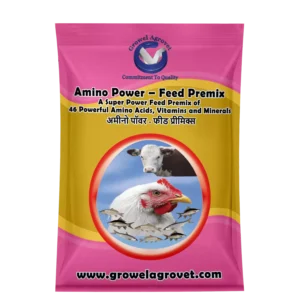
Recommended to feed Amino Power
Minerals as Nutrients for Cattle
The major minerals in cattle nutrition are calcium, phosphorus, sodium, chlorine, magnesium and potassium. Animals require these at comparatively high levels, described as a percentage of diet or grams per day.
An essential mineral performs specific functions in the body and must come from the diet. However, too much of any mineral may be harmful or even dangerous.
Calcium (Ca) and Phosphorus (P)
Calcium and phosphorus are the most abundant minerals present in the animal. They are also the ones producers most often add to ruminant diets. Both minerals are found in teeth and bones. Calcium is also found in milk and eggs. Additionally, Ca is necessary for blood clotting, muscle contraction, and numerous biochemical reactions in the body. All biochemical reactions that allow animals to utilize energy from food require phosphorus.
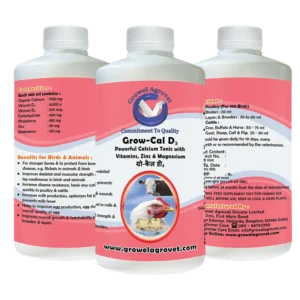
Animals usually require 1.5 parts of Ca for every part of P. Diets high in legume hay usually require only supplemental P, while diets high in grain often require supplemental Ca. Young animals (including humans) that do not receive adequate Ca or P may develop rickets. In cattle, rickets shows up as arched backs. A deficiency of vitamin D may also contribute to this problem. Older animals fed inadequate vitamin D develop osteomalacia. Symptoms include weak and easily fractured bones. Animals eating diets low in Ca and P will show a drop in milk production. A low level of P in the diet may also cause poor reproductive performance in females and lower the availability of vitamin A.
The calcium-to-phosphorus ratio is very important. It should be more than 1:1 but less than 7:1. If possible, add the proper amounts of Ca and P to cattle diets, or feed it free choice. Mineral supplements formulated for free-choice feeding usually have Ca and P present in a 1:1 or 2:1 ratio.
Research has shown that animals on range need supplemental P. Any mineral supplement you use should contain at least 14 per cent P.
Sodium and Chlorine
Sodium and chlorine occur together as sodium chloride (NaCl or common salt). These minerals serve to maintain proper acidity levels in body fluid and pressure in body cells. The hydrochloric acid found in the stomach contains chlorine.
Even though many feeds contain enough sodium and chlorine to meet cattle requirements, supplemental cobalt iodized (blue) salt or trace mineral salt should be available at all times.
Potassium (K)
Potassium, like sodium, helps maintain proper acidity levels in body fluids and pressure in body cells. It is also required for several enzyme reactions in carbohydrate metabolism and protein synthesis. Forages normally contain more than adequate amounts of potassium. However, supplemental potassium may be necessary for high-grain feedlot diets.
Magnesium (Mg)
Magnesium is necessary for energy utilization in the body and for bone growth. Cattle fed on lush, immature pasture may have a low level of Mg in the blood. This can result in grass tetany, a disease characterized by convulsions, muscle twitching, staggering gait and falling.
Sulphur (S)
Sulphur is a component of body protein, some vitamins, and several hormones. It participates in protein, fat and carbohydrate metabolism, as well as blood clotting and the maintenance of proper body fluid acidity. Most feeds contain adequate amounts of S for cattle. However, supplemental S may become necessary when non-protein nitrogen sources are utilized in high-grain feedlot diets.
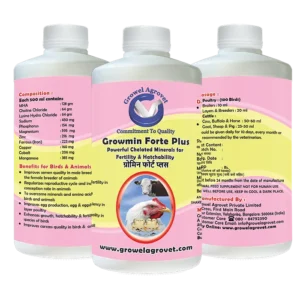
Recommended to feed Chelated Grwmin Forte
Trace Minerals as Nutrients for Cattle
Feeding trace minerals is not a simple matter. Animals require these minerals only in very small amounts. Some minerals fed in excess may cause a deficiency in others. A slight deficiency or excess may cause a decrease in performance that is hard to pinpoint. Even though the level in the diet appears adequate, an animal may occasionally respond to an increased supply of a particular mineral because other dietary factors may have decreased its availability.
Iron (Fe)
Iron is an essential part of hemoglobin, a compound that carries oxygen in the blood. An Fe deficiency may cause anemia and reduce growth. Generally, there is no need to supply extra iron except for baby pigs. According to analyses from feed testing laboratories, virtually all feeds in Alberta contain enough iron for cattle.
Zinc (Zn)
Zinc affects growth rate, skin conditions, reproduction, skeletal development and the utilization of protein, carbohydrates and fats in the body. While Zn deficiency is not common in ruminants, it can cause a mange-like skin condition called parakeratosis.
The recommended dietary allowance (RDA) is 50 parts per million (ppm). The average concentration in Alberta feeds is 30 ppm. If a supplement is required, you can supply it in trace mineralized salt, mineral or protein supplement.
Copper (Cu)
A copper deficiency can result in anemia, hair depigmentation, infertility, scouring, and cardiac failure. Feed testing laboratories find that many samples contain less than the estimated RDA of 10 ppm. Although the symptoms of copper deficiency rarely become evident, improved growth and performance often follow Cu supplementation.
Manganese (Mn)
Manganese is essential for carbohydrate utilization. Mn deficiency in Alberta cattle is rare. Symptoms include stunted bone growth and reproductive failure. The RDA for Mn is 50 ppm. Average concentrations in Alberta feeds range from 21 ppm in barley grain to 91 ppm in grass hay.
Cobalt (Co)
Cobalt is necessary for the microorganisms in the rumen to synthesize vitamin B12.
Iodine (I)
Iodine is needed in trace amounts by the thyroid gland, which influences the body’s metabolic rate. A deficiency causes goitre. Because the prairie provinces are deficient in both cobalt and iodine, you must use a salt containing both of these elements.
Molybdenum (Mo)
Molybdenum forms an essential part of some enzymes. It may also stimulate fibre-digesting microorganisms in the rumen.
Excessive quantities of Mo interfere with Cu utilization and may cause a Cu deficiency. Symptoms include severe scours and body weight loss. If the diet is also high in sulphur, the problem becomes more severe. Mo-induced Cu deficiency is not common in Alberta.
Selenium (Se)
Selenium is deficient in some regions of the province and surplus in others. “Alkali disease” or “blind staggers” occurs when cattle eat feed containing toxic or excess amounts of Se (10 ppm) over a long period. Chronic toxicity results in weight loss, dullness, hoof sloughing and lameness. Toxicity is rare but occasionally occurs where cattle on overgrazed pasture must eat a milk-vetch that accumulates selenium. The best cure is to remove the animal from the pasture.
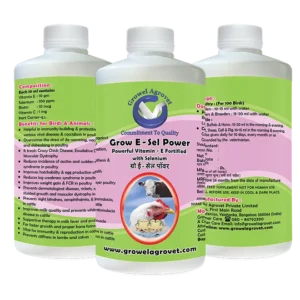
Selenium deficiency may result in “white muscle disease” in calves, lambs and foals. A vitamin E deficiency increases the amount of selenium required to prevent this form of nutritional muscular dystrophy. Cows on Se-deficient diets may have lower fertility and an increased incidence of retained placentas. The RDA for Se is 200 parts per billion. Se deficiency is quite common in west-central and northern Alberta. You can add Se to salt or mineral mixes, or inject it.
Recommended to feed Grow E-Sel
Chromium (Cr), Tin (Sn) and Nickel (Ni)
These elements appear to be present in sufficient quantities to meet the requirements of most farm animals.
Fluorine (Fl)
Fluorine is essential for proper bone development but will cause toxicity if fed at too high a rate. It is used in domestic water supplies to reduce tooth decay. Too much Fl causes abnormal bone growth, mottling and degeneration of teeth, and delayed growth and reproduction. To avoid excessive Fl consumption, ensure that any rock phosphate you feed is defluorinated.
You can effectively supplement trace minerals in cattle diets by using the proper trace mineralized salt.
Recommended to feed Chelated Grwmin Forte
Vitamins as Nutrients for Cattle
These organic compounds are required in minute amounts by the body. They are essential to metabolism. Some vitamins must come from the feed of ruminants.
Vitamin A
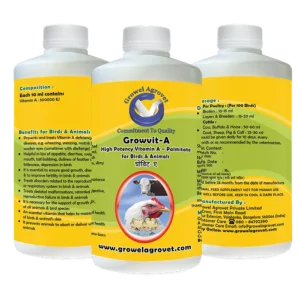
Vitamin A is the most important vitamin in cattle nutrition. It is the only one that normally must be added to cattle diets. Vitamin A is necessary for bone development, sight, and maintenance of healthy epithelial tissues (i.e., lining of digestive and reproductive tracts). A deficiency can cause increased disease susceptibility, night blindness and reproductive failure.
Green forages that contain carotenoids can supply vitamin A. The body breaks down carotenoids into vitamin A. Therefore, laboratories analyse forages not for vitamin A but for carotenoids, which are measured in milligrams per kilogram or pound: mg/kg or mg/lb.
Cattle can convert 1 mg of carotene to 400 international units (IU) of vitamin A. In contrast, chickens can convert 1 mg to 1667 IU of vitamin A.
Animals on green grass can store vitamin A in the liver and draw on it for 2-3 months.
The average carotene value of alfalfa hay is 24.6 mg/lb. However, the range of vitamin A equivalent values supplied by alfalfa would be expected to vary from 120 IU to 35,400 IU per pound. Although Alberta forages may contain sufficient carotene to meet all requirements, it is good insurance to feed vitamin A. The carotene content of a forage declines in storage. Fortunately, vitamin A is inexpensive. The dry granular product is the most economical source.
You may also inject animals with a 2-3 month supply. You should inject it twice during the winter.
Water-soluble vitamin A is sometimes added to the water. However, it is difficult to tell whether the animal is getting its daily or monthly quota this way. Do not rely on mineral supplements to supply vitamin A, as they only contain very small amounts.
Vitamin D
People call vitamin D the “sunshine vitamin” because ultraviolet light acting on a compound on animal skin changes that compound into vitamin D. Vitamin D is found in sun-cured forages. Animals kept outdoors or fed sun-cured hay do not usually suffer a deficiency. However, animals kept indoors and fed silage may do so.
Vitamin D is involved in the uptake of Ca and P. Thus, a vitamin D deficiency resembles Ca and P deficiencies: rickets in young animals, weak bones in older animals, and a decreased growth rate.
Vitamin E
Vitamin E and selenium have similar and interrelated functions in the body. Use supplements containing vitamins D and E in addition to vitamin A. They may not always be necessary, but they cost little to add.
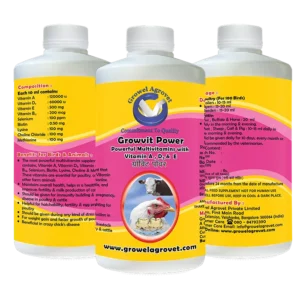
Recommended to feed Growvit Power
You should also read Importance of Vitamins and Minerals for Cattle.
If you are into dairy or cattle related business and want to earn maximum profit, please join our Facebook group How To Do Profitable Poultry & Cattle Farming?