 Heat Stress in Layer Poultry can have a significant impact on layer flocks, but there are measures for heat stress management in layer poultry that can be taken to keep hens healthy and producing more eggs. When summer temperatures rise, egg producers need to be ready or they will see egg output decline, and flock moralities increase.
 Heat Stress in Layer Poultry can have a significant impact on layer flocks, but there are measures for heat stress management in layer poultry that can be taken to keep hens healthy and producing more eggs. When summer temperatures rise, egg producers need to be ready or they will see egg output decline, and flock moralities increase.
The comfortable ambient temperature for poultry is between 18 and 24C. Above this, birds fail to maintain their normal internal body temperature (41.6C), due to the absence of sweat glands and complete feather coverage of the body. When the ambient temperature rises above the ideal, a chicken’s internal body temperature also rises, leading to a drop in feed consumption (>26-32C), heat stress (>35C), panting, prostration (>35C) and death (>38C).
Failing to manage Heat Stress in Layer Poultry results in poor layer production performance, and it should be remembered that older birds and heavier birds are more sensitive to heat stress than younger and lighter birds. Heat stress can be managed by altering the macro- and micro-environments where birds are housed.
There are four specific areas that can be easily managed to ensure that Heat Stress in Layer Poultry are kept as comfortable as possible during hotter months and that egg production is not reduced. These are as follow:
- Poultry Housing Management in Summer
- Poultry Drinking Water Management in Summer
- Poultry Feed Management in Summer
- General Management of Poultry Farming in Summer
Poultry Housing Management in Summer :
- The long axis of the poultry house should be in an East-West direction, and the roof overhang should extend to at least 1.5 meters to reduce the amount of direct sun and rain entering the house. Paste or paint the shed roof with a reflective covering. General best practice is to whitewash the roof with lime. This can reduce the house temperature by up to 2C.
- Cover the layer house roof with insulating materials such as paddy straw, sugar cane leaves, coconut leaves or hay.
- Provide ridge vents at roof level to allow hot air to exit, so that cool air may enter the poultry shed through side openings.
- Outside of the house, attach sprinklers onto the roof. Turning them on during hot weather will bring down the temperature inside the house.
- Use of side curtains – gunny bags can be used to protect birds from direct hot wind currents. Those bags facing any oncoming winds can be kept wet so that birds feel a cool breeze. Adopting this practice can reduce the temperature up to 2-3C.
- Inside the poultry shed, attach foggers at bird level to reduce the temperature. Fog should be kept to a fine mist only, to prevent the birds, litter and feed from becoming wet.
- Planting tall trees around the farm can help to reduce radiant heat.
- A good roof overhang and curtaining can help protect birds from direct sunlight.
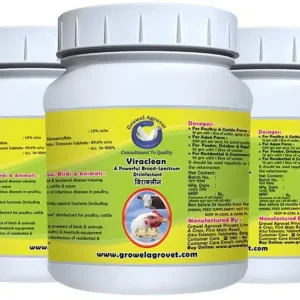
- Foggers should be at bird level and only produce a fine mist. You should regularly spray Viraclean inside and outside of poultry shed to protect birds from viral diseases in summer .
Poultry Drinking Water Management in Summer :
- During hot weather, chickens pant to bring down their body temperature, and this leads to a higher-than-normal loss of water, so plenty of drinking water must be available, but it must be managed carefully. Provide three to four times the normal daily amount of water.
- Do not completely fill the overhead water tank during the hotter summer months, and conduct flush-outs during the day to slow down any heating of standing water. If possible, cover the tank with wet gunny bags and paint it with a reflective covering.
- Increase the frequency of watering. Birds must always have access to cool water.
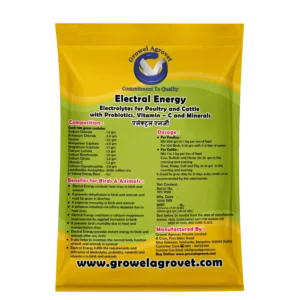
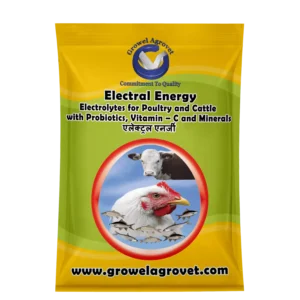
- Giving birds salt will stimulate their water consumption. Supplement drinking water with 0.2 percent salt and Electral Energy to maintain birds’ electrolyte balance.
- Electral Energy can be added to drinking water, as it is also a good carrier for vitamins and minerals during the summer. Supplementing Electral Energy through water has been found to more beneficial than adding it to feed.
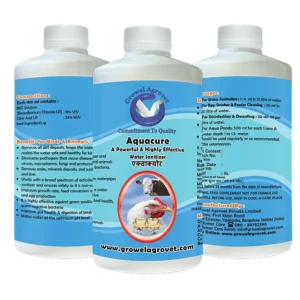
- Always give sanitise and pure water ,you can sanitise the water with good quality water sanitizer Aquacure.
Poultry Feed Management in Summer :
- As layer hens’ feed intake tends to reduce during hotter months, they should be fed with supplemented diets, so that egg production is not reduced.
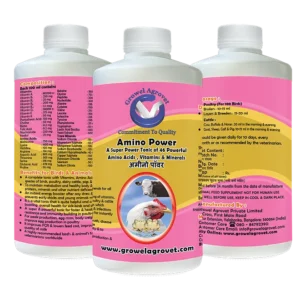
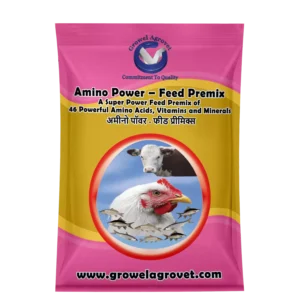
- Layers prefer high energy (in terms of fat calories) and low protein (2- 3 percent less than normal) diets with balanced amino acids (in terms of lysine and methionine) Amino Power . Supplementing feed with respect to energy should be done in the form of fat calories only, and the following are worth keeping in mind:
- Replace 10-15 percent of feed energy normally supplied by carbohydrates and proteins with 1-2 percent vegetable oil/fats.
- Substitute 20-25 percent of de-oiled rice bran with oiled rice bran. This will not only ensure that the feed is rich in fat calories, but it will also prevent feed becoming dusty so making it more palatable. Use only fresh oiled rice bran, and keep only 1 week to 10 days’ supply to avoid oxidation of stocks.
- Supplement the layer feed with Amino Power in line with feed intake. Replace DL-methionine with methionine hydroxyl analogue and betaine.
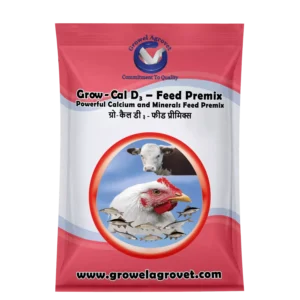
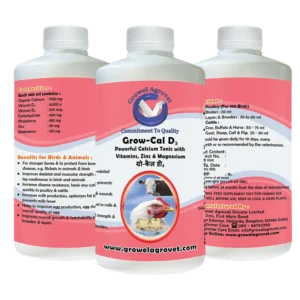
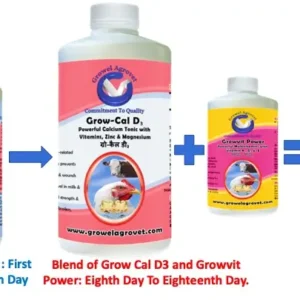
- Increase the calcium content of the diet from 4 percent to 5 percent and should give Grow Cal D3.
- Replace 40-50 percent of any salt in the diet with sodium bicorabonate to help maintain egg shell quality.
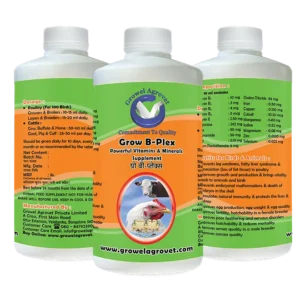
- Vitamin and mineral premixes should be increased by 25 percent, with particular attention paid to Electral Energy
- Supplementation with additives such as synbiotics, phytobiotics, acidifiers and dextrose can also help in alleviating the heat stress.
- Feed birds as specific times. One-third of the feed should be given in the early hours of the day, 4-5 a.m., and the remainder later in the day, noon-1 p.m. It is beneficial to dim the lights while feeding, in order to reduce physical activity and hence heat load on the birds. Feed should be stirred in the feeders. During hotter months, birds wet feed with saliva, which can lead to caking in the feeder, the growth of mold and production losses.
- A good mycotoxin binder should be added to the poultry feed.
General Management of Layer Poultry Farming in Summer :
- A minimum-maximum thermometer should be hung inside the poultry shed to check temperature variations during the day.
- Application of any medicines or vaccines, debeaking and any movement of the birds should be carried out during the cooler part of the day. When medicines are administered, there should be plenty of cool, fresh water available as well as quality feed.
- Anti-coccidial Ciprocolen, should be used with caution and selectively during hotter weather as some can aggravate heat stress. You should also read Layer Poultry Medicine Chart
If you are into poultry related business & want to earn maximum profit in your business then please join our Facebook group How To Do Profitable Poultry & Cattle Farming ?
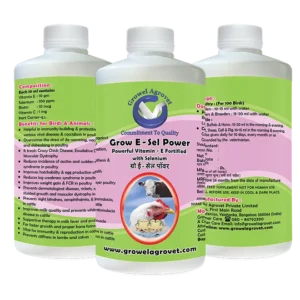
Grow E-Sel ग्रो ई-सेल
|
Electral Energy एलेक्ट्रल एनर्जी
|

 Vitamin -E Fortified with Selenium for Layer Poultry